Key Results
53,063 hrs - Engine Hours Avoided
$498,665 - Estimated Fuel Cost Avoided
2.2 M lb - CO2 Emissions Avoided
97,777 gal - Fuel Saved
103 - Oil Changes Avoided
269 Days - Reporting Period
Fuel-cost impact is calculated from the workbook’s configured fuel price of $5.10 per gallon and the reported 97,777 gallons saved.
The Challenge
Reliable temporary power must be available continuously, even when actual site demand is intermittent or well below generator capacity. That creates a difficult tradeoff: keep conventional generators running to preserve readiness, or find a way to reduce runtime without compromising power availability.
-
Low average utilization can translate into long generator run hours relative to the energy actually required
-
Fuel consumption compounds across multi-unit, long-duration construction deployments
-
Frequent engine operation increases scheduled maintenance requirements, including oil changes
-
Data center projects face growing pressure to document measurable reductions in fuel use and emissions
Operating Profile
• Average load: 4.6%
• Maximum load: 58.1%
• 15 units in use
• 23 total units in the reported fleet
The Solution
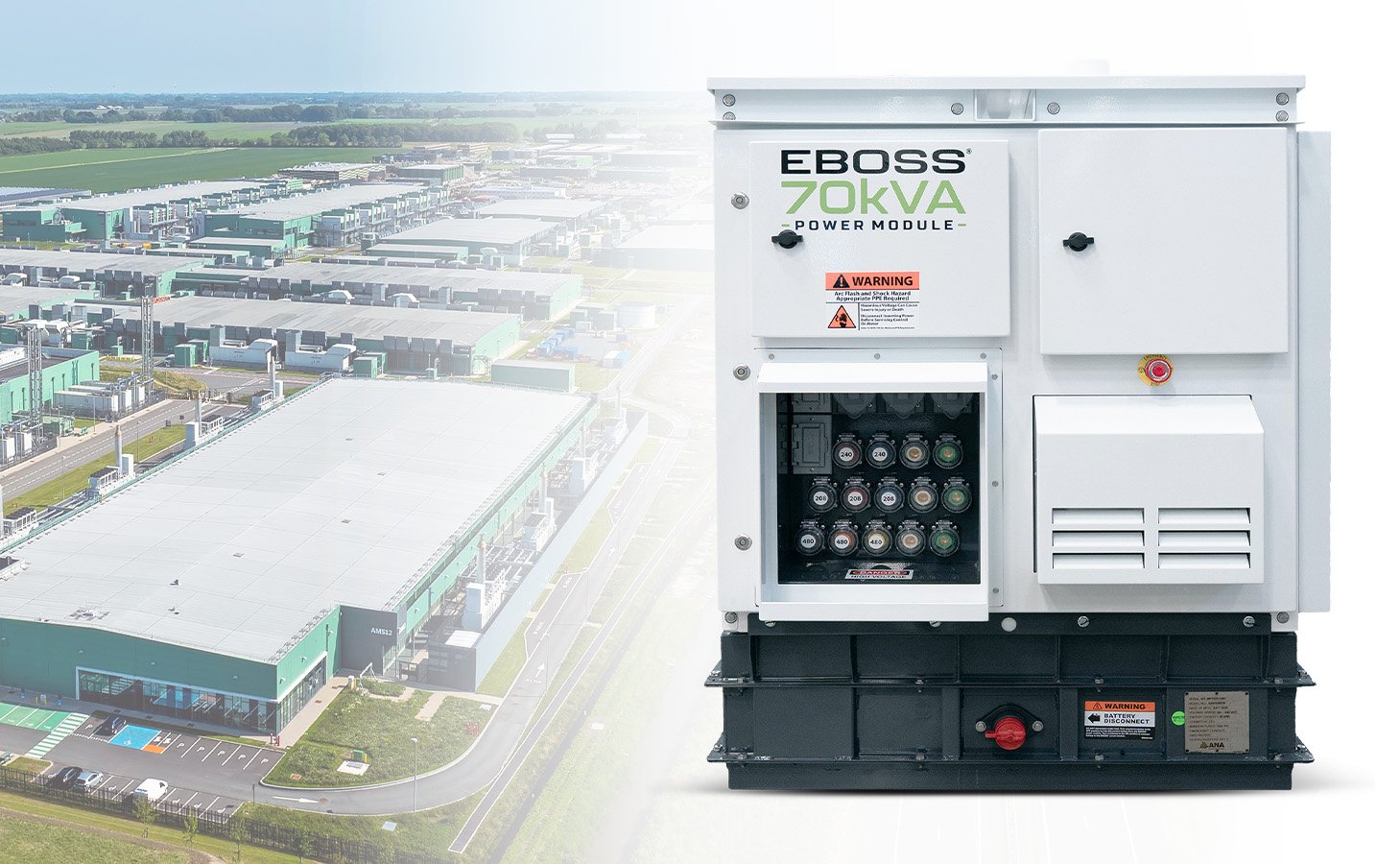
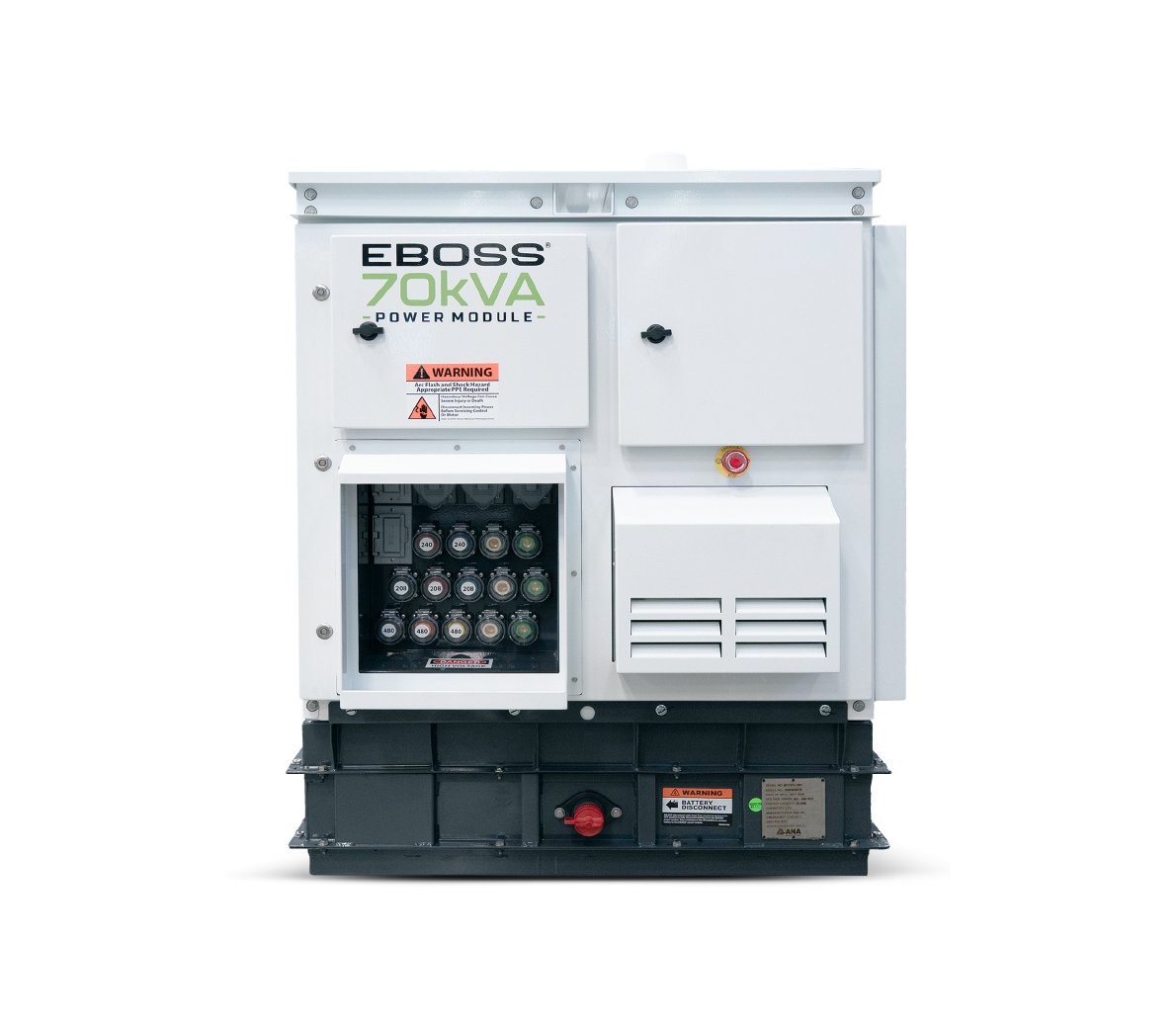
Hybrid Power with EBOSS®
EBOSS combines energy storage with mobile generation to reduce unnecessary engine operation during low-load periods. Instead of relying on a generator to run continuously, the hybrid configuration can serve lighter demand from stored energy and call on generation when operating conditions require it.
Why EBOSS® Fit This Application
Runtime optimization: The reported EBOSS fleet accumulated 13,579 engine hours compared with 66,641 modeled hours for standard generator operation.
Fuel efficiency: Reduced engine operation lowered fuel use from 134,633 modeled gallons to 36,855 gallons over the reporting period.
Maintenance reduction: Lower runtime translated to 21 modeled EBOSS oil changes versus 124 for standard generator operation - 103 service events avoided.
Emissions impact: Reduced fuel consumption lowered modeled CO2 output from 3.02 million lb to 827,403 lb.
Break up these sections with testimonial quotes or other highlights that reinforce your case study narrative.
The Results
Across the 269-day reporting window, EBOSS® delivered measurable reductions in every major operating-cost driver tracked by the report. Generator runtime fell by 79.6%, while fuel consumption and CO2 emissions each fell by 72.6%. The corresponding reduction in scheduled oil changes demonstrates how runtime savings can also reduce maintenance burden and service interruptions.
| Metric |
Standard Generator |
EBOSS |
Reduction / Impact |
| Engine Runtime |
66,641 hr |
13,579 hr |
53,063 hr avoided /79.6% |
| Fuel Consumption |
134,633 gal |
36,855 gal |
97,777 gal saved / 72.6% |
| CO2 Emissions |
3,022,507 lb |
827,403 lb |
2,195,105 lb avoided / 72.6% |
| CO2 Emissions (mt) |
1,371.9 mt |
375.6 mt |
996.4 mt of CO2 avoided |
| Oil Changes |
124 |
21 |
103 avoided |
Economic Impact
At the report’s configured fuel price of $5.10 per gallon, the 97,777 gallons of avoided fuel equate to approximately $498,665 in fuel cost avoided during the reporting period. This figure reflects fuel only; the report does not assign a dollar value to the 53,063 avoided engine hours or 103 avoided oil changes, so those additional operating benefits are not included in the cost total.
Performance Proof
Each 1,000 gallons of fuel avoided also reduces the corresponding combustion-related CO2 output, tying operating efficiency directly to measurable emissions performance.
Why This Matters for Data Center Projects
Data center construction is a strong fit for hybrid temporary power because sites can require continuous power readiness even when actual loads fluctuate dramatically. This deployment demonstrates that a hybrid energy system can address that mismatch at scale: preserving a generator-backed power strategy while dramatically reducing the hours engines need to run.
A Repeatable Model for Similar Sites
-
Use EBOSS where temporary power demand is intermittent, low on average or highly variable.
-
Track runtime, fuel, maintenance and emissions together to quantify the full operational impact.
-
Scale the approach across multi-unit deployments where small per-unit efficiencies compound into large fleet-level savings.
-
Use measured performance data to support project cost, sustainability and equipment utilization decisions.
Measured Performance Snapshot
53,063 engine hours avoided along with 97,777 gallons of fuel saved, 103 fewer modeled oil changes and 996.4 metric tons of CO2 emissions avoided over 269 days.
Build a More Efficient Temporary Power Strategy
EBOSS® gives data center project teams a practical path to reduce generator runtime, fuel use, maintenance exposure and emissions without giving up the flexibility of mobile power. Use performance data from your own load profile to identify where hybrid energy can create the greatest impact.
Learn More About EBOSS® Hybrid Energy Solutions
ANACORP.COM