

Skip to content

Reducing Generator Runtime by up to 55% While Powering a Complex Robotic Conveyor System

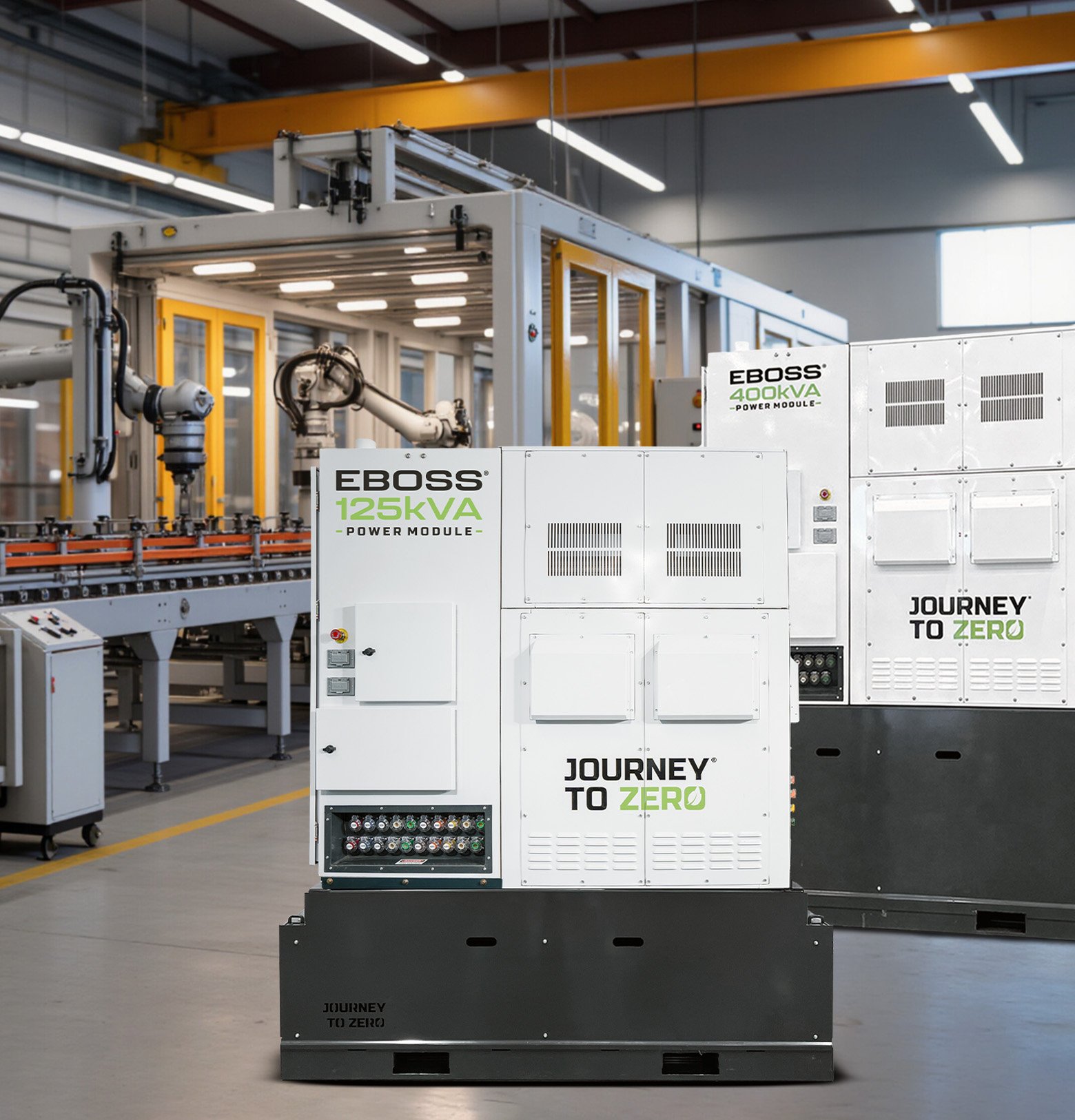
POWER-MODULES-HERO-1.png

Industry

Industrial Power | Material Handling

Challenge

An automated material-handling facilityoperating robotic conveyor systems requiredcontinuous, high-quality power for a complex480 V, three-phase load. ANA deployed fiveparalleled EBOSS power modules, while a 1MW generator operated only as the chargingsource. During a measured 12-hour operatingwindow, the EBOSS system continuouslycarried the production load and isolatedit from generator cycling. If that operatingpattern is representative of a full day, thegenerator would run approximately 10.5 hoursand remain off approximately 13.5 hours.

Results

The source file contained 721 complete, synchronizedone-minute records covering exactly 12 hours. Acrossthat measured period, the five paralleled EBOSSunits delivered approximately 2,393 kWh, supportedan average real load of 199.4 kW, and reached ameasured peak of 268 kW. The highest 60-minuteaverage was 251.5 kW, showing that elevated demandwas sustained rather than limited to a brief spike.

Key Product

Product one
56.2%
Projected Reduction in generator runtime
13.5
Projected engine-off hours per day
199kW
average real load supported
268kW
Measured Peak Load

The 24-hour energy and runtime values areprojections based on a measured 12-houroperating window and operator-reportedgenerator/AFE runtime. They should be replaced with a complete synchronized 24-hour dataset before publication as final customer performance or before calculating contractual savings.

Credibility Note

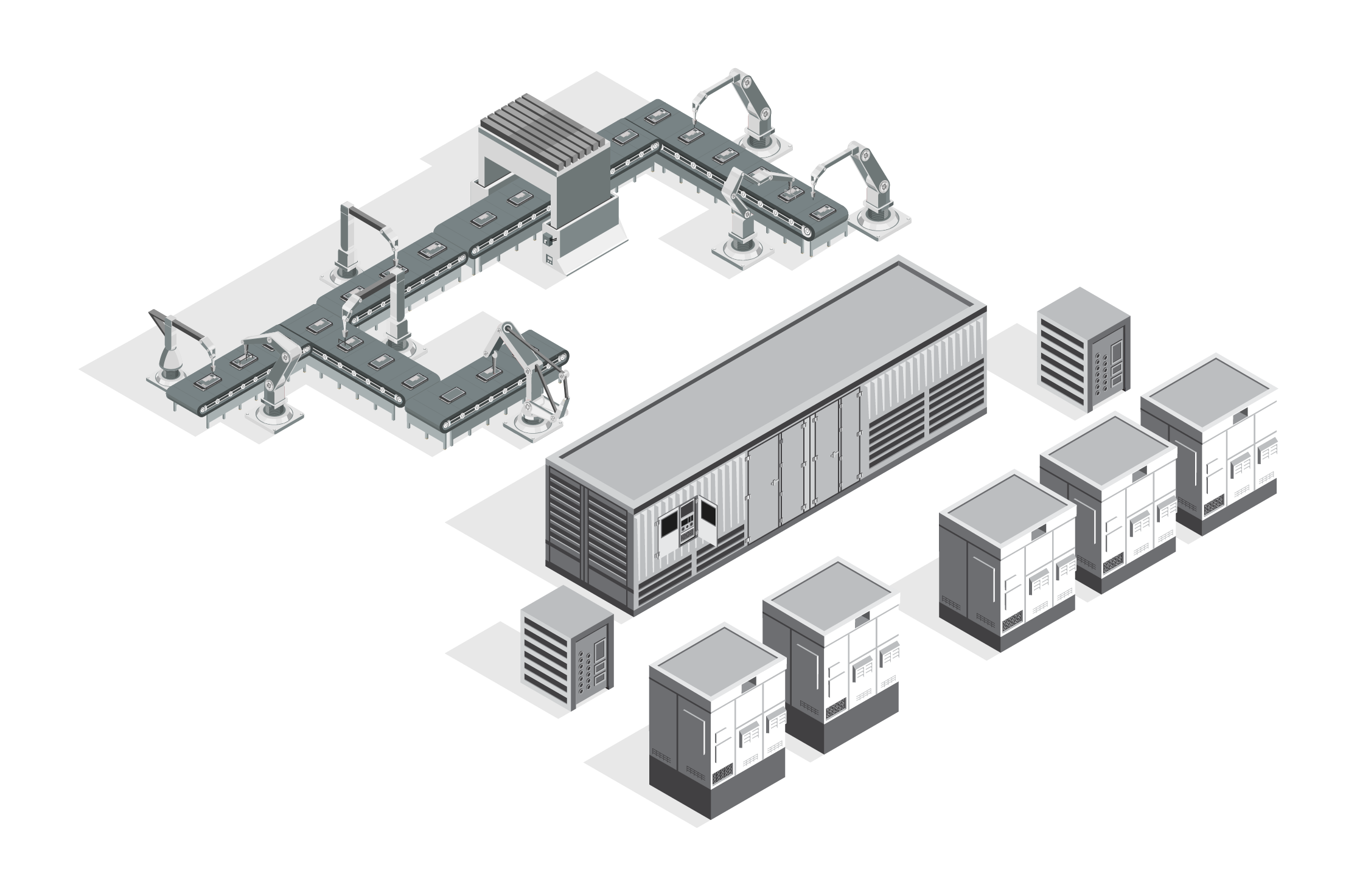
ISOMETRIC-ROBOTIC-CONVEYOR2

About The Application

The application was an automated industrial material handling environment with robotic equipment, conveyors, motors, transformers, variable-frequency drives, and energized controls. The customer and site identity were intentionally anonymized for external use. The application was an automated industrial material handling environment with robotic equipment and conveyor drives. These loads can create substantial inductive, nonlinear, harmonic, and transient current, especially when motors, transformers, drives, and control power remain energized during periods of reduced production.

Customer/site identity is intentionally anonymized for external case-study use.

The Challenge

A difficult industrial load that could not be evaluated by peak kW alone.

  • The measured peak reached 268 kW, but peak apparent demand was approximately     472 kVA

  • Average apparent demand was approximately 413 kVA, with an estimated average power factor of 0.48

  • The load maintained a high reactive-current burden even when real production demand fell

  • A conventional generator connected directly to the load would need to absorb the full electrical burden, load variation, nonlinear current, and transient response

The Solution

ANA deployed two EBOSS 400 kVA power modules and three EBOSS 125 kVA power modules operating together as one synchronized inverter source on a common 480 V, three-phase bus. The 1 MW generator served only as the battery-charging source and did not directly follow the production load.

Why EBOSS

  • Continuous inverter-supported production power

  • Controlled generator charging windows

  • Reduced engine runtime, noise, and service-hour accumulation

  • Integrated telemetry for load, runtime, synchronization, temperature, and               operating-state visibility

The Results

The source file contained 721 complete, synchronized one-minute records covering exactly 12 hours. Across that measured period, the five paralleled EBOSS units delivered approximately 2,393 kWh, supported an average real load of 199.4 kW, and reached a measured peak of 268 kW. The highest 60-minute average was 251.5 kW, showing that elevated demand was sustained rather than limited to a brief spike.

  • Average real load: 199.4 kW

  • Measured peak: 268 kW

  • Sustained one-hour maximum: 251.5 kW

  • Average apparent load: approximately 413 kVA

  • Average combined current: approximately 497 A

  • Measured 12-hour energy delivered: approximately 2,393 kWh

  • Projected 24-hour energy delivered: approximately 4,786 kWh

  • Projected generator runtime: 10.5 hours per day

  • Projected generator-off time: 13.5 hours per day

Why This Matters

This deployment shows how generator-backed hybrid power can support an industrial load that is more complex than its peak kW suggests. By separating the production-load requirement from the generator operating strategy, the EBOSS system maintained continuous inverter power while allowing the generator to operate only during controlled charging periods. The same architecture may be relevant to other manufacturing, logistics, mining, port, and remote industrial applications with difficult loads and high uptime requirements.

Closing

EBOSS handled the difficult load first. The next optimization cycle should convert that successful operation into a fully reconciled 24-hour dataset with verified fuel, runtime, power-quality, and service-impact results.


Learn how EBOSS hybrid power can reduce generator runtime while maintaining production ready power.

Contact ANA | anacorp.com

Ready to get started?