The Challenge
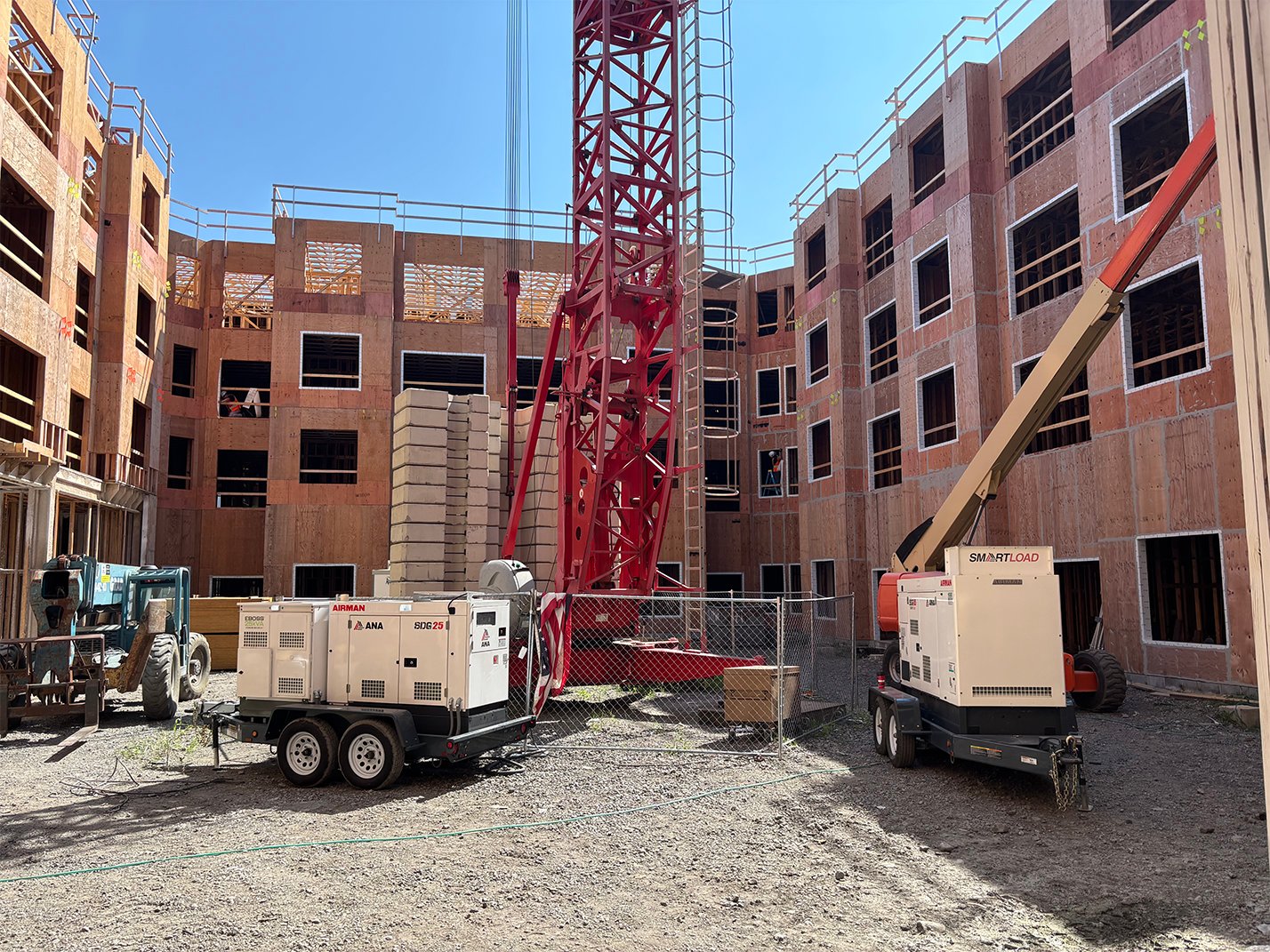
Tower crane operations expose a fundamental inefficiency in traditional power systems. While initial lifts demand high peak power—reaching up to 13.3 kW—this requirement quickly drops to an average load of just 0.6 kW, with periods of no load at all.
This extreme variability forces generators to operate well below their optimal range for the majority of the workday. Running under these low-load conditions leads to excessive fuel consumption, increased engine wear, and common issues like wet stacking that drive up maintenance requirements.
At the same time, cranes generate energy during load lowering, but conventional generators are unable to capture or reuse it without additional systems. As a result, valuable energy is lost during normal operation, compounding inefficiencies and increasing both cost and environmental impact.
In short, traditional generator setups are not designed for the dynamic, stop-and-start nature of crane workloads—creating a persistent gap between how power is supplied and how it’s actually used.
The Solution
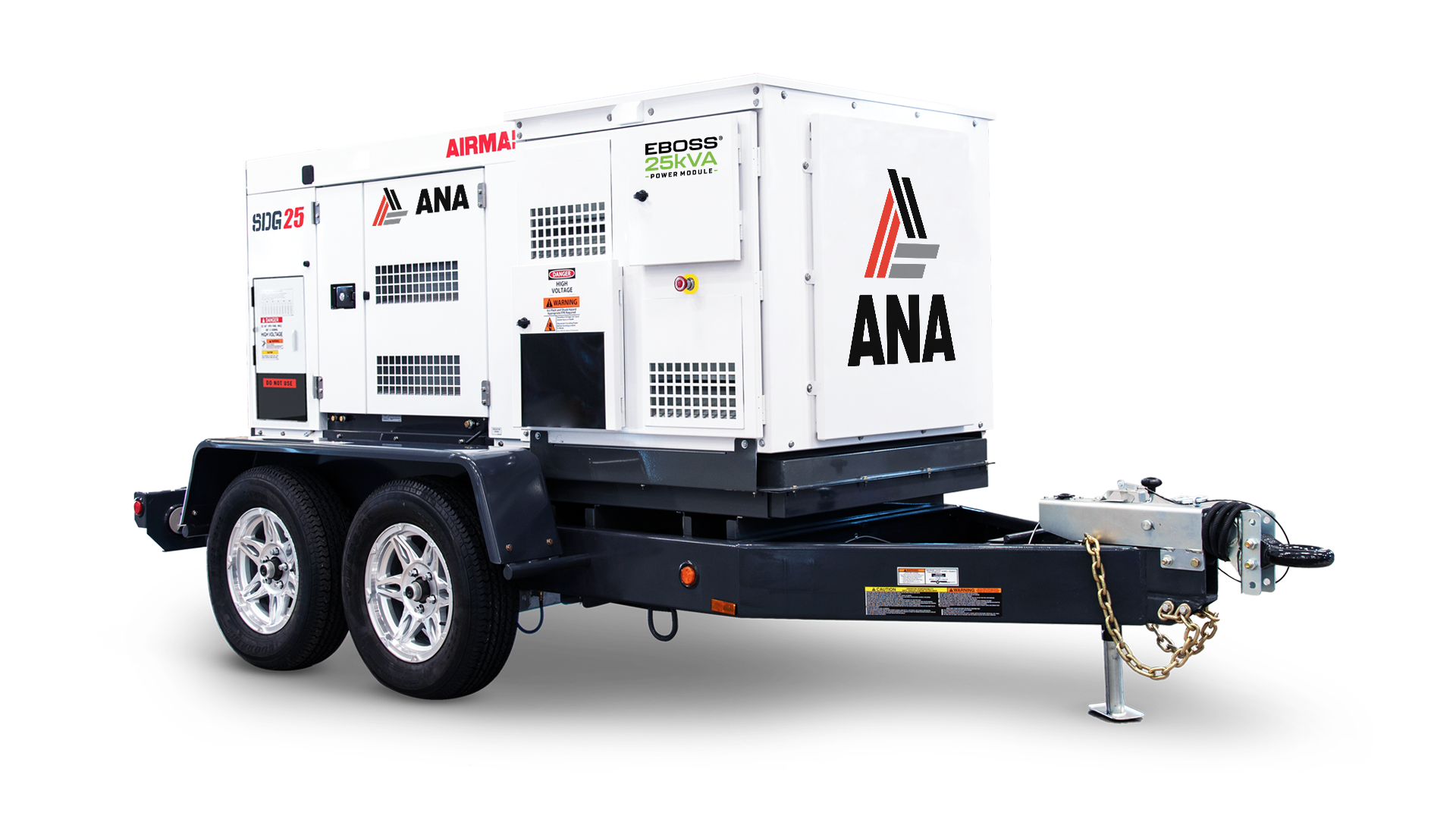
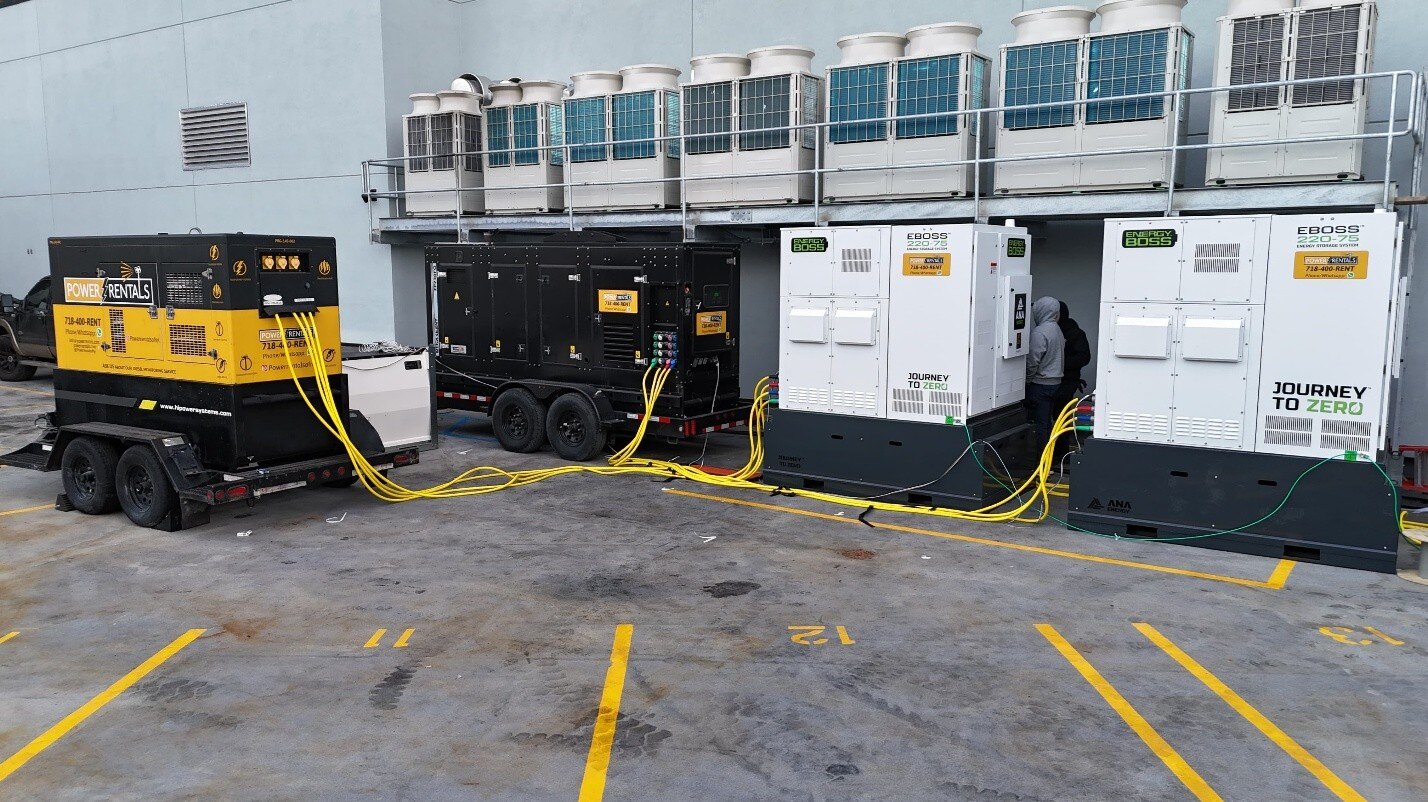
To address this mismatch, a hybrid energy approach was implemented using the EBOSS 25-25 Energy Storage System alongside a standard generator (SDG45/65).
At the core of this solution is intelligent load management. The system stabilizes power demand by absorbing fluctuations, allowing the generator to operate only when needed—and within its most efficient range. During low-demand periods, stored energy powers operations independently, significantly reducing generator runtime.
Crucially, the system captures regenerative energy produced during crane lowering and stores it for reuse. Instead of being wasted, this energy is reintegrated into the system, improving overall efficiency.
By reducing reliance on constant generator operation and minimizing low-load conditions, the solution not only optimizes energy use but also improves equipment health—extending generator lifespan and reducing maintenance risks.
The Results
Performance Snapshot (30-Day Study)
The impact of this approach was both immediate and substantial:
- Engine runtime reduced from 414 hours to 26 hours — a reduction of 388 hours
- Fuel consumption dropped from 621 gallons to 42 gallons — saving 579 gallons
- CO₂ emissions decreased from 13,937 lbs. to 938 lbs. — a reduction of 13,000 lbs. (5.9 metric tons)
Despite highly variable demand (0.0 kW minimum to 13.3 kW peak), the system maintained a stable and efficient power profile throughout the study period.
Additional Validation
A secondary dataset reinforced these results under similar operating conditions:
- Engine runtime reduced by 336 hours
- Fuel savings of 789 gallons
- CO₂ emissions reduced by 17,723 lbs. (8 metric tons)
Operational Impact
Across both datasets, the system delivered:
- Over 90% efficiency gains
- Dramatically lower fuel consumption
- Significantly reduced engine runtime
- Recovery and reuse of previously wasted energy
- Lower emissions and environmental impact
- Reduced total cost of operation
Crane operations are just one example of a broader challenge across construction: traditional generators are not built for variable, intermittent loads.
By integrating energy storage, power supply can finally match real-world demand. The result is a step change in efficiency—unlocking meaningful cost savings, extending equipment life, and reducing environmental impact without compromising performance.